2014-01-02

China And Britain Won The War Together

 
China And Britain Won The War Together
Japan's refusal to face up to its aggressive past is posing a serious threat to global peace
Windwing - China And Britain Won The War Together
Koreans in Seoul Railway Station watch a TV news program on Japanese Prime Minister Shinzo Abe's visit to the controversial Yasukuni war shrine

In the Harry Potter story, the dark wizard Voldemort dies because the seven horcruxes, which contain parts of his soul, have been destroyed. If militarism is like the haunting Voldemort of Japan, the Yasukuni Shrine in Tokyo is a kind of horcrux, representing the darkest parts of that nation's soul.

Last week, in flagrant disregard of the feelings of his Asian neighbors, Shinzo Abe, the Japanese prime minister, paid homage at the Yasukuni Shrine, where 14 Class A war criminals – defined as those who committed "crimes against peace" – are enshrined. They were among the 28 Japanese political and military leaders convicted by an international military tribunal after the Second World War.

The Yasukuni Shrine was established more than 150 years ago, and Asian people know very well how it has since been used by Japanese militarists as a spiritual symbol to launch wars of aggression. In addition, it is deeply offensive to witness convicted war criminals being venerated. These were leaders found guilty of inflicting indescribable suffering on countless individuals during the war. Rightly, within hours of Mr Abe's visit, there were strong condemnations from China, South Korea and across the international community.

Visits to the shrine by Japanese leaders cannot simply be an internal affair for Japan, or a personal matter for any Japanese official. Nor does it concern only China-Japan and Korea-Japan relations. Deep down, paying this kind of homage reveals whether Japan is trustworthy. It raises serious questions about attitudes in Japan and its record of militarism, aggression and colonial rule.

At stake is the credit of that country's leaders in observing the purposes and principles of the UN Charter and upholding peace. It is a choice between aggression and non-aggression, between good and evil and between light and dark. Regrettably, what Mr Abe did has raised the spectre of militarism rising again in Japan.

Mr Abe's track record provides evidence. Since taking office in 2012, he has been talking enthusiastically about justice, democracy, peace and dialogue. But the reality is seen in his actions. He is unrepentant about Japan's militarist past and makes no apologies for it. He has openly questioned whether his country should be defined as an "aggressor", and did his utmost to beautify its history of militaristic aggression and colonial rule.

In May 2013, Mr Abe caused great offence in China and Korea when he was photographed posing in a military jet boldly marked with the number 731: this was the code of an infamous Japanese biological warfare research facility performing human experiments in China during the war.

With these precedents, the world should be very alert. Mr Abe wishes to amend the post-war pacifist constitution, imposed on Japan by the USA. Close attention should be paid to his colleagues, such as Taro Aso, the deputy prime minister, who asserted that Japan could "learn" from Nazi Germany about revising constitutions. Mr Abe has worked hard to portray China as a threat, aiming to sow discord among Asia-Pacific nations, raising regional tensions and so creating a convenient excuse for the resurrection of Japanese militarism.

Last year, I explained in a newspaper article the key principles concerning the Diaoyu Islands in the East China Sea, and pointed out the severe consequences of Japan's provocations. This time, I believe Mr Abe has continued his brinksmanship by visiting the Yasukuni Shrine; it has rekindled bitter memories of Japan's past-war crimes.

We know from history that a country that starts a war and ends up in defeat has two options. One is to face up squarely to its past, make sincere apologies and renounce militarism, as Germany did. The German approach has contributed to regional stability and world peace. It has earned respect and acclaim from the whole world.

The other option is to deny past aggression, allow militarism to rise and raise the threat of war. Unfortunately, Mr Abe's actions confirm that he favours the second option: he seems determined to lead Japan on to a perilous path. The international community should be on high alert.

Next week, The Railway Man, a film based on a true story, will be released. It tells the tragic story of a British PoW tortured by the Japanese in the Second World War. The film is not only about the atrocities committed by his Japanese captors, but also how one of them is harrowed by his own past. His redemption is only effected through deep remorse and penitence.

China and Britain were wartime allies. Our troops fought shoulder to shoulder against Japanese aggressors and made enormous sacrifices. Sixty-eight years have passed since that horrible war. Yet there are always some incorrigible people in Japan who show no signs of remorse for war crimes. Instead, they seek to reinterpret history. They pose a serious threat to global peace. The Chinese will not allow such attempts. I am sure British and all other peace-loving folk will not remain indifferent.

China and Britain are both victors of the Second World War. We played a key role in establishing the post-war international order that has delivered great benefits for mankind. Our two countries have a common responsibility to work with the international community to oppose and condemn any words or actions aimed at invalidating the peaceful post-war consensus and challenging international order. We should join together both to uphold the UN Charter and to safeguard regional stability and world peace.


2013-12-07

The Glorious Days

The Glorious Days
                            By Beyond For Nelson Rolihlahla Mandela

Windwing - The Glorious Days · Nelson Rolihlahla Mandela
http://v.youku.com/v_show/id_XNjQ0NTQ0ODk2.html


The Bell Rings For The Call Of Home  

In The Life Of His  

It Seems To Be Meaningless  

The Thing Dark Skin Has Given To Him  

Is Fighting For Black Race All His Life  

You've Lost What You Owned In Those Years  

But There're Still Hopes In Your Weary Eyes  

Now We've Only Got The Empty Life  

To See The Glorious Days  

Holding Freedom In Stormy Seas  

Suffering The Painful Time Life Brings  

Will Surely Make A Change  

Who Can Just Make It Right  

Can We Forget About The Races  

Hope On This Land  

Equality Is For Everyone  

The Pretty Color Shows Its Own Beauty  

Cause It Does Not  

Separate Each Of Them  

You've Lost What You Owned In Those Years  

But There're Still Hopes In Your Weary Eyes  

Now We've Only Got The Empty Life  

To See The Glorious Days  

Holding Freedom In Stormy Seas  

Suffering The Painful Time Life Brings  

Will Surely Make A Change  

Who Can Just Make It Right


2013-10-18

How To Be A Leader

http://world.time.com/2013/10/17/whats-the-secret-to-chinas-incredible-success/

WATCH: China's Viral Video On How To Be A Leader

According to a wildly popular online cartoon in China, the answer lies in the careful way the country grooms its leaders—a process that puts the American and British political career ladder to shame


Video Site "http://v.youku.com/v_show/id_XNjIxNjAyNzM2.html"

The "How Leaders Are Made" video, which has been viewed more than 1 million times since it was uploaded on Oct. 15, presents cartoon characters representing China's President Xi Jinping and the six other men who make up the country's ruling Standing Committee.

As a bouncy Xi bobs across the screen, a bright, cheery voice intones that every provincial or ministerial level leader in China is chosen from among 140,000 officials—a process that takes at least 20 years. The men who rule the world's second-largest economy, clearly, are very special men whose selection involves "meritocratic screening that requires years of hard work like the making of a kung fu master."

And what effort does reaching the level of U.S. President involve, according to the video? Only one year and "an unending flow of greenbacks." (Becoming Britain's PM is compared to Susan Boyle winning "Britain's Got Talent.")

Who exactly produced the cartoon isn't clear. The five-minute spot was uploaded in Beijing and the closing credits are for "A studio on Fuxing Road." Surely this is a pun: fuxing, or revival, is a signature catchphrase of China's ruling Communist Party, which has unveiled a propaganda campaign calling for the national revival of the Middle Kingdom.

Furthermore, Fuxing Road in Beijing is a street famous for being lined with government bureaus. The office of the General Administration of Press, Publication, Radio, Film and Television is one of them. As speculation erupted over the video's mystery creator, the Southern Metropolis Daily, an occasionally enterprising Chinese daily, quoted an expert who said the video was very likely made by someone in government. After all, despite the massive number of hits the cartoon has received, the video has not been pulled by China's industrious censors.

2013-10-01

Why Reading Their Own Language Gives Mongolians A Headache

http://en.rocketnews24.com/2013/09/27/why-reading-their-own-language-gives-mongolians-a-headache/

Why Reading Their Own Language Gives Mongolians A Headache

Windwing - Why Reading Their Own Language Gives Mongolians A Headache

Being able to read is something many people take for granted. I mean, English with its Latin alphabet only consists of 26 letters. Now imagine that the writing system (or script) of your country was changed for political reasons. Cities and towns across the border share almost the same spoken language, but with a totally different way of writing it down. This has been the situation in Mongolia. Drastic changes in scripts throughout the twentieth century have led to recurrent headaches for native readers.

I've met many a foreigner in Japan, or third culture kid who despite their fluent spoken language skills was unable to read. Here's an example. A friend of mine who learned Bulgarian from her parents was visiting her native land. She jumped into a taxi, confident that she'd be driven to her destination, and fluently gave the address. The taxi driver gave her an extremely odd look. It turned out that where she wanted to go was right there, but she couldn't read the signs to figure that out.

Spoken Japanese is fairly easy to pick up if you live in Japan, while memorizing the bare minimum of 2,136 kanji characters for everyday use requires serious study. And that doesn't include the incredibly varied characters for personal names or place names. Foreigners who can chat comfortably in Japanese are a lot less likely to be able to read signs or menus, let alone newspapers. Let's just say I've seen even native speakers sneakily looking up how to write a particular kanji on their phones.

Not being able to read easily is tough, wherever you live. In Mongolia, reading can be a huge pain for native speakers… this is why!

- "Ma, why do I have to learn my alphabet twice?"

There are currently two forms of writing the Mongolian language. One is the traditional Mongolian script ("Old Mongol script") written vertically down the page like this:

Windwing - Why Reading Their Own Language Gives Mongolians A Headache

The other is Mongolian Cyrillic, written horizontally like this:

Монгол Кирилл үсэг

Cyrillic is used in the state of Mongolia, while the traditional Mongolian script is used in neighboring Inner Mongolia (an autonomous region of the People's Republic of China). You might expect that because Mongolian is now written in Cyrillic it's similar to Russian, but in terms of grammar Mongolian is much more like Japanese .

Traditional Mongolian script is said to date from 1204, when scribe Tatar-Tonga was captured by the Mongols and introduced the Uyghur form of writing, originally written horizontally. Eventually, this became written vertically—Mongolians might say that happened because it was easier to write down the horse's neck rather than across.

However, by the end of the century this would change. The Yuan dynasty of Kublai Khan (famous grandson of Genghis) promoted the imperial Phagspa script for the vast area they controlled. This intricate writing system was invented by Tibetan lama Zhogoin Qoigyai Pagba for Kublai Khan. It ambitiously aimed to be a script able to be used for all the languages under their sway, including Chinese, Tibetan and Mongolian.

▼  Phagspa script

Windwing - Why Reading Their Own Language Gives Mongolians A Headache

In 1368 the Yuan dynasty collapsed, and as the Mongols retreated to the steppes, this writing system soon fell out of use and was replaced by traditional Mongolian script once more. The reason Phagspa disappeared so quickly could have been its privileged existence as a faithful representation of the language of the imperial court—it didn't reflect how ordinary people spoke.

About 600 years later, Mongolian script reached another turning point. In 1921 revolution broke out, and by 1924 communist rule was established in the new Mongolian People's Republic.

- "Workers of the world, unite!" Different alphabets adopted under Soviet pressure

▼  Latin script propaganda

 Windwing - Why Reading Their Own Language Gives Mongolians A Headache

In 1924, the literacy rate was below 10 percent. Mongolian script was held up to ridicule, and Latin script was named the alphabet of the revolution for writing Mongolian. Away with the old ways of thinking and in with the new—the traditional teaching of Buddhist parables gave way to educational reform.

From the early 1930s, there were attempts to switch from Mongolian to Latin script, but these early attempts met with strong opposition. However, in the latter half of the decade circumstances changed as continued use of Mongolian script was denounced as "nationalist" in the wake of Stalin's Great Terror. Everyone was forced to support the Latinization of Mongolian writing, in fear for their lives.

In February 1941, the government gave an official green light to the use of Latin script, but the following month, these same public officials decided Mongolian should be written using the same Cyrillic alphabet as Russian. Clearly, there had been some kind of pressure exerted by Moscow.

In the 1950s, linguistically-divided Chinese Inner Mongolia also began to consider adopting Cyrillic. But from the end of the decade the Sino-Soviet split came to a head and cast a pall over this movement, which eventually sputtered and died.

During the perestroika period, Moscow's grip loosened. People regained their appreciation for tradition, and cultural renaissance was in the air. A new movement to abolish Cyrillic and restore Mongolian script arose. In September 1992, education began in Mongolian script from the first year of primary school. Unfortunately, when these children reached third year, Cyrillic was adopted once more. In the face of harsh economic reality, the budget couldn't stretch to train teachers and educate students in the vertical Mongolian script.

- Writing systems divided by national borders

As a result, while the state of Mongolia and Chinese Inner Mongolia speak almost the same language, it is written in totally different ways in each country. It's possible that these writing systems may never be united.

The phenomenon of border lines creating linguistic division can be seen all over the world. A country which gains independence generally wishes to gain independence from the language of the oppressors and a distinct voice, especially if there is a shared border. Crucially, the changes in written Mongolian did not come about through the will of the Mongolian people, but through the political posturing of surrounding nations. Next time you come across a written English word that you don't know how to pronounce, spare a thought for Mongolia's differing systems of writing.

Source: Yukiyasu Arai, Japan Business Press
Featured image:  Rona Moon
Insert images: Wikipedia , Akihabara Area Blog

2013-08-31

Why China Will Oppose Any Strike On Syria

Why China Will Oppose Any Strike On Syria

It isn't because Beijing likes chemical weapons or Assad.
 

2013-08-02

Japan Minister’s 'Weimar Constitution' Comment Draws Fire

Windwing - Japan Minister's 'Weimar Constitution' Comment Draws Fire
Taro Aso, Japan's deputy prime minister and finance minister, makes a speech in Tokyo on July 25.

Finance Minister Taro Aso has come under fire for comments that some listeners interpreted as suggesting Tokyo should look to Nazi Germany as a model in changing its pacifist constitution — though aides deny that intent.

The reported comments from the gaffe-prone politician quickly drew criticism from a Jewish human rights group as well as from South Korea, which suffered under Japan's past militarism. Earlier this year, Mr. Aso angered Seoul by visiting a controversial Tokyo war shrine.

During a Tokyo speech Monday, Mr. Aso — who also serves as deputy prime minister and was once prime minister — said Japan should learn how Germany's constitution under the Weimar Republic was transformed by the Nazis before anybody realized what was happening.

"Germany's Weimar Constitution was changed before anyone noticed. It was changed before anyone was aware. Why don't we learn from that technique," Japanese media quoted Mr. Aso as saying. The comments were confirmed by his office.

His aides said Mr. Aso was in his local district on the southern island of Kyushu on Wednesday and couldn't be reached for comment. But they said his remarks were taken out of context, and Mr. Aso didn't say anything to praise Nazi Germany. Rather,  he was trying to convey how discussions over constitutional revision should be conducted in a calm environment.

"Minister Aso referred to pre-war Germany as a negative example for Japan," said Ichiro Muramatsu, one of Mr. Aso's secretaries. "Continuing emotionally charged discussions could lead the discussions into a wrong direction. Mr. Aso didn't in any way support the Nazi constitution or the way they changed the Weimer constitution."

A report by Kyodo news agency also quoted Mr. Aso as saying how the Weimar constitution was the most "progressive" in Europe at the time, but that the Nazis emerged under it. "Even under a good constitution, things like that happen," he was quoted as saying.

Whatever Mr. Aso's intended meaning, the extended quotes in the Japanese media suggest that, as is sometimes the case, his comments were a bit rambling, and the point was articulated in an ambiguous manner that could leave members of the same audience reaching different conclusions — or at least scratching their heads.

Mr. Aso was speaking at an event organized by the Japan Institute for National Fundamentals, a conservative think tank that has called for revising the constitution. The group has also stirred controversy by denying widespread claims Japan's military was involved in forcibly recruiting women to work in battlefield brothels during the war.

Mr. Aso's reported comments immediately drew criticism from South Korea, whose relationship with Japan has been strained by disputes over Japan's wartime actions and territorial disagreements, and which views warily Japanese Prime Minister Shinzo Abe's drive to revise the postwar pacifist constitution.

South Korean Foreign Ministry spokesman Cho Tai-young told reporters Tuesday that Mr. Aso's remarks "obviously hurt many people."

"It is also clear how such remarks are seen by the peoples of neighboring countries invaded by imperial Japan in the past. I believe that the Japanese political leaders should be careful with their words and behavior," Mr. Cho said, according to an official ministry transcript.

The Los Angeles-based Jewish human rights organization, the Simon Wiesenthal Center, also released a statement Tuesday urging Mr. Aso to clarify his remarks.

"What 'techniques' from Nazis' governance are worth learning–how to stealthily cripple democracy?" the statement quoted rabbi Abraham Cooper, associate dean of the SWC, as saying.

"Has Vice Prime Minister Aso forgotten that Nazi Germany's ascendancy to power quickly brought (the) world to the abyss and engulfed humanity in the untold horrors of World War II? The only lessons on governance… from the Nazi Third Reich are how those (in) positions of power should not behave," Rabbi Cooper concluded.

Japan's top government spokesman declined to comment, saying the issue was up to Mr. Aso. "I believe this is something that Minister Aso should respond to," Chief Cabinet Secretary Yoshihide Suga told a news conference.

Mr. Aso is no stranger to verbal gaffes and political controversy. In 2001, Mr. Aso, then the economy minister, told a roomful of foreign journalists: "It's good that foreigners are working in Japan. This may be arbitrary and biased, but a good country is a country where rich Jews would want to live."

During his 2008-2009 premiership, he said doctors were "lacking in social common sense," and that stock market players were "not trusted." He once publicly uttered a sigh of relief that it was a "good thing" that a 2008 rain storm "took place in Okazaki," where two people died in the storm, and not in more populous Nagoya.

After becoming finance minister last December, Mr. Aso found himself in the hot seat after local media reported he said the country's elderly should die without using expensive life-sustaining treatment funded by taxpayers.  He denied the reports, saying he was misinterpreted. He also drew attention in June for suggesting the main reason Japan's banks avoided the subprime crisis was that their poor command of English stopped them from making the complicated investments.

–Toko Sekiguchi contributed to this item.


2013-07-26

We Were Pirates, Too

We Were Pirates, Too

Why America Was The China Of The 19th Century.

BY CHARLES R. MORRIS | DECEMBER 5, 2012

Windwing - America Were Pirates 

The ship carrying Francis Cabot Lowell and his family home from England in the summer of 1812 was intercepted by a British war squadron, which held the passengers and crew for some days at the British base at Halifax, Canada. Lowell's baggage was subject to several intensive searches, for his captors had been warned that he may have stolen designs for power textile weaving machinery, a serious crime in England. Lowell, indeed, had done just that -- but, aware of the risk, had committed the designs to memory.

The British rarely accorded outsiders the privilege of touring their cotton plants. But Lowell was a leading Boston merchant who imported a great deal of British cloth and had solid relations with his British counterparts. One can imagine him on one of his tours, feigning languid disinterest even as he diligently filed away details on gearing and loom speeds. By the gentlemanly codes of the day, it seems dishonorable.

Today, it's China that is the rising power, and the United States that is the hegemon wary of the young upstart. To China, the United States appears much as Great Britain did to Americans two centuries ago. The U.S. Navy is an intrusive presence on its coasts, while U.S. support for Taiwan parallels British sympathies for southern separatists. Most threatening for Beijing is the appeal of America's raucous democracy for China's rising masses.

The Chinese today are as determined as 19th-century Americans were to achieve economic parity with their rival, and like early Americans, will steal all the technology they can. The important difference is that modern documentation standards make theft much more rewarding. Any drawings Lowell purloined would have been mostly dimensionless and only approximately accurate. (He was fortunate that Paul Moody, the genius mechanic who designed and built his plants, was also a skilled weaver.) In the mid 19th century, Americans were also desperate to replicate Britain's famed Sheffield steel, by common consent the world's finest. But the best Sheffield craftsmen the United States could buy failed to replicate it. (The key, which even the British had not guessed, was the local clay used in the heating vessels.)

Today, Chinese espionage is widely assumed to have targeted virtually all big American technology companies. A long list of firms, including Apple, Boeing, Dow Chemical, Dupont, Ford, Motorola, Northrup Grumman, and General Motors, have pursued successful criminal actions against Chinese moles and other agents.

Back in 1812, finished cotton textiles dominated British exports, accounting for about half of all trade revenues, the fruit of a half century of progress in mechanized mass production.  Proportionate to GDP, the industry was about three times the size of the entire U.S. automobile sector today. High-speed textile manufacture was a highly advanced technology for its era, and Great Britain was as sensitive about sharing it as the United States is with advanced software and microprocessor breakthroughs. The British parliament legislated severe sanctions for transferring trade secrets, even prohibiting the emigration of skilled textile workers or machinists.

But the Americans had no respect for British intellectual property protections. They had fought for independence to escape the mother country's suffocating economic restrictions. In their eyes, British technology barriers were a pseudo-colonial ploy to force the United States to serve as a ready source of raw materials and as a captive market for low-end manufactures. While the first U.S. patent act, in 1790, specified that "any person or persons" could file a patent, it was changed in 1793 to make clear that only U.S. citizens could claim U.S. patent protection. 

China's modern trade and patent regimes are similarly tilted against outsiders. "Use" patents are freely awarded for Chinese versions of Western inventions. High-value chips are denied import licenses unless companies allow the "inspection" of their source code. Western partners willingly make Faustian bargains to contribute crown jewel technologies for the sake of immediate contracts. German companies that once supplied mag lev technology to their Chinese high-speed rail partners now find themselves shut out by newly born Chinese competitors. Last summer, GE made a similar deal involving its highly valuable, and militarily sensitive, avionics technology.

If anything, the early Americans were even more brazen about their ambitions. Entrepreneurs advertised openly for skilled British operatives who were willing to risk arrest and imprisonment for sneaking machine designs out of the country. Tench Coxe, Alexander Hamilton's deputy at Treasury, created a system of bounties to entice sellers of trade secrets, and sent an agent to steal machine drawings, but he was arrested. While skilled operatives were happy to take U.S. bounties, few of them actually knew how to build the machines or how to run a cotton plant.

The breakthrough came in the person of Samuel Slater. As a young farm boy, he served as an indentured apprentice to Jedidiah Strutt, one of the early developers of industrial-scale powered cotton spinning. As Strutt came to appreciate Slater's great talents, he employed him as an assistant in constructing and starting up new plants. (In his signed indenture, Slater promised to "faithfully ... serve [Strutt's] Secrets.")

Worried about his future in England, Slater made the jump to the United States when he was 21, bringing an unusually deep background in mechanized spinning. Emigrating under an assumed name, he answered an ad from Moses Brown, a leading Providence merchant, who had been badly stung by ersatz British spinning machinery. Brown was sufficiently impressed by Slater to finance a factory partnership, and over the next 15 years, Slater, Brown, their partners, and the many people they trained created a powered thread-making empire that stretched throughout New England and down into the Middle Atlantic states. Former president Andrew Jackson called Slater "The Father of the American Industrial Revolution," the Brits called him "Slater the Traitor."

The development implications were profound, for Slater and Lowell together jump-started American mass-production manufacturing, the essential ingredient in its startling 19th-century growth. The United States' present-day high technology could have much the same implications for China. There is no point appealing to Chinese ethics -- in the great game of nations, ethics don't enter into the conversation. Had Americans invented a magic telescope into British factories, they surely would have used it. A more appropriate response is to apply what some have called "innovation mercantilism": If Lowell had been reincarnated as an American consultant today, he could have told the multinationals to keep all Chinese out of their factories, no matter how friendly they seemed.  


2013-06-27

Why China Might Be A Better Superpower


Why China Might Be A Better Superpower

Unlike the US, China does not have a substantial history of invading and subjugating the inhabitants of far-flung lands.

Last Modified: 25 Jun 2013 14:14
Windwing - Murtaza Hussain

Murtaza Hussain is a Toronto-based writer and analyst focused on issues related to Middle Eastern politics.

Windwing - Why China Might Be A Better Superpower
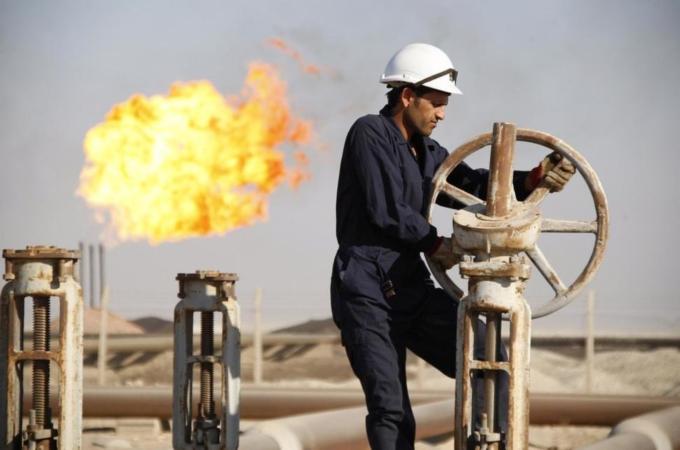
China is one of the most influential commercial players in Iraq's oil boom [Reuters]
 

"The nationswhich today own the world's resources fear the rise of China and wish to postpone the day of that rise." - Rabindranath Tagore, 1915

Until the mid-20th century, China suffered what has been termed as the "Century of Humiliation" - a period of subjugation and oppression by Western military powers (as well as the Japanese). During this time Western imperialists flooded the country with drugs, raped and murdered its subjects with impunity and - due to both insatiable greed and abject ignorance to concepts such as culture and history - wantonly desecrated the priceless monuments of ancient Chinese civilisation.

At the outset of this period - when hordes of English soldiers destroyed Beijing's ancient Summer Palace in an orgy of looting and arson - Major General Charles Gordon said, "You can scarcely imagine the beauty and magnificence of the places we burnt" - which in many ways was emblematic of the entire carnivorous project of Western imperialism in Asia, Africa and Latin America.

Today, however, Rabindranath Tagore's prophecy about China seems to have come to fruition, and the modern heirs to rapacious criminals such as Gordon now openly lament their fear of rising Chinese power.

In the place of the former colonial forces such as England and France, however, today, sits the US, the world's only remaining military superpower. While since the fall of the Soviet Union the US has been widely considered to be the preeminent nation globally, in recent years it has fallen into an observable malaise.

Due to its wars of aggression, institutionalised torture, unaccountable assassination programmes and general contempt for the rule of law, the American government has today sacrificed whatever was once considered admirable about its role in international affairs. Furthermore, it is fast sacrificing what was once most admirable about it domestically, as once-cherished civil liberties are being forfeited and its citizens are being compelled to submit to an opaque and pervasive surveillance state.

While China is far less free domestically, in international affairs the country continues to ascend both economically and in terms of international influence. It is thus worth asking, is this a positive development for the world at large? Could China be a more responsible, less violent and more constructive superpower than the US?

Historical contrasts

Over its history, the US has undoubtedly provided much for the betterment of mankind in the fields of science, arts, good governance and human development. The country continues to produce some of the most exceptional contributors in all these areas, and for all the cruel excesses of the US government the American people are among the most generous, hospitable and high-achievingpopulation in the world. The US is by no means a monolith and its impressive ideological diversity continues to be one of its enduring strengths. 

However, while the US was founded on the principle of national self-determination, throughout its history, its foreign policy has been based on denying that same right to others around the globe. From the early 20th century invasions and occupations of the Philippines and Haiti, the CIA coups against democratic governments in Iran and Chile, up to the near genocidal military onslaughts against the Vietnamese and Iraqi people, the US - in a relatively short time frame - has left a trail of destruction around the world which is without parallel in human history.

While couched in the deeply cynical rhetoric of freedom and democracy, the body count left by US militarism and colonial exploitation runs to millions. It has been well-documented that what has motivated these brutally malicious policies (aside from naked greed) is a crude sense of racism and a chauvinistic belief in "Manifest Destiny" - the same ruthlessly imperialistic ideology which helped justify the holocaust committed against the indigenous people of the Americas and which drove the Atlantic slave trade.

China, despite existing as a unified country 4,000 years longer than the US, conspicuously does not have such a history of invading and subjugating the inhabitants of far-flung lands. While it has had its share of localised conflicts, there is nothing in its history - even over the many centuries during which China was as at the peak of its historical power - that is remotely comparable to the industrialised exploitation and mass-murder which has characterised the Western colonial project.

Despite being one of the wealthiest and powerful countries on earth for most of its existence, China's relationship with the outside world has traditionally been characterised more by Sino-centric inertia and peaceable exchange than by armed pillage and the export of violence to foreign lands. As surmised by the famed 19th century scholar of Buddhism, Zhang Taiyin:

"Asian countries… rarely invaded one another and treated each other respectfully with the Confucian virtue of benevolence."

While China has in many ways been torn from its traditional culture by traumatic recent encounters with Western imperialist powers and the subsequent upheavals of Mao's Cultural Revolution, the country's traditionally harmonious worldview ("harmony" being a recurring theme in Chinese political culture) is still seen in modern China's global relations.

China's peaceful rise

To achieve its foreign policy goals in Iraq, the US embarked on a decades-long campaign of violence against the Iraqi people which culminated in the brutal invasion and occupation of the country in 2003. While the US succeeded in destroying the lives of millions of innocent Iraqi civilians, it failed to create an outcome which was of benefit to it and ultimately left the country with its influence and prestige greatly eroded.

China, however, has in many ways emerged as the "winner" of the Iraq war, as it is today by far the biggest beneficiary of Iraqi crude oil contracts. In stark contrast to the US primitive and brutal approach to the country, China has used soft-power to great effect and is now the most influential commercial player in the country's oil boom.

Thanks to its efforts China is today recognised as a major investor in the future of Iraq. According to the New York Times, Chinese executives are now even impressing their Iraqi counterparts by speaking with them in flawless, Iraqi-accented Arabic.

The contrast between China's culturally sensitive approach and the contemptuous and violent attitude taken by the US in Iraq cannot be overstated. In fact, these contrasts are in many ways a reflection of the differing worldviews and historical backgrounds of the two countries.

While the US seems committed to exert imperial hegemony over the Middle East using brute military force and punitive economic blockades against civilians, China has publically committed to a policy of "peacefully rising" and has built mutually beneficial and respectful relationships throughout the region.

While Chinese polices are no less self-interested, the country's forthright pragmatism is a refreshing alternative to the blatantly cynical and manipulative moralising rhetoric of Western powers. Shallow accusations of Chinese colonialism in Africa (based on Chinese commercial investments in the region) appear borne more of Western fears of Chinese power than of legitimate concerns about African self-determination.  

Evidence suggests that China's influence in Africa has been built on the basis of mutual economic interest and its investments have coincided with historically unprecedented economic growth among the people of the continent. The contrast with the unrelentingly murderous and rapacious history of actual  Western colonialism in Africa could not be starker.

A multipolar world

China today is a burgeoning player in global affairs, making forays into the Israel/Palestine conflict, taking material steps to confront environmental issues and pushing its "soft-power" approach to international relations to new lengths. In the face of its rising stature many pundits and political figures have attempted to harp upon the inevitable growing pains of any rising power and cite this as evidence of its immaturity.

While China is by no measure perfect, for years the country and its people have been unjustly demonised by those whose own hands are caked in the blood of untold number of innocents. Allegations of purported Chinese malevolence should be viewed for what they most often are - the hysterical propaganda of those who are fearful and insecure about competition for their own privileged position.

The US however should not fear the rising tide of Chinese influence. Rather, it should warmly welcome it. In a unipolar world, the US government was free to act out its most self-destructive tendencies and was devoid of any pressure to reform in order to compete with a major adversary. Indeed, the US achieved its most admirable feats when it was facing serious competition from Soviet Russia.

While China is not yet a large enough player to individually balance the US on most major issues, its status is rising. When working within the emerging "BRICS" bloc of countries, it is capable of constraining unilateral US actions. This is good for both the American and Chinese people, as the existence of a multipolar world will mean that neither government will be able to delve into unchecked excess and military adventurism.

However, as China's relationship with the US and other major powers develops, there is no doubt that the country has finally come to equal terms with its former oppressors. China's ascendance signifies the fruition of Tagore's prophecy and the long victory of the Chinese people over Western imperialism.

If China continues its remarkably successful policy of "peacefully rising" while pursuing continued self-improvement and reform, it will remain both a welcome player in global affairs and a responsible model for other aspiring world powers.

Murtaza Hussain is a Toronto-based writer and analyst focused on issues related to Middle Eastern politics.

Follow him on Twitter: @MazMHussain 

2013-06-25

Chinese Netizens React Strongly To Prism

Chinese Netizens React Strongly To Prism

Windwing - LiKaiFu

Kai Fu Lee

CEO at Innovation Works

Windwing - Chinese Netizens React Strongly to Prism

If you think Prism has made a mess in the US, you should see the reaction in China.

China has a very active Twitter-like "microblog" called Sina Weibo, with over 400 million registered. They actively discussed Prism and Snowden, with over two million postings and discussions. The overall tone was very clear – microbloggers were angry about the perceived hypocrisy, they were sympathetic to Snowden, and they were disillusioned about the US as a democratic role model.

The first reaction for most Chinese netizens was anger towards the US government. Prism was portrayed as a broad-scale surveillance project targeting "non-US citizens outside the US." To them, this was a blatant invasion on their privacy committed by a foreign country which has no jurisdiction over them. Many microbloggers showed concern for the Chinese First Lady, who was photographed to be using an iPhone during her visit to the US. The microbloggers asked "Would the US government access her private data through Apple's iCloud?"

The netizens also felt Prism revealed American hypocrisy. Just prior to the Prism news, the US pointed fingers at China for cyber-espionage. But through Prism, the US appears to be doing exactly what it accuses China of. Another recent report by Foreign Policy about NSA's ultra secret China hacking group further exacerbated the matter. While media coverage was moderate, the most important state-owned media CCTV and Xinhua both covered the news, and the latter quoted Snowden saying that he "exposed the truth about America being the Hacker Empire." These reports left little doubt in the microbloggers' mind that the US was "one thief calling another thief."

The issues above extended into a credibility crisis for the US government and even its founding principles and values. The US government is considered by the reform-minded Chinese netizens as the role model for protecting human rights and freedom of speech. And the Chinese blogosphere is often enlivened with heated debates between the hardliners vs. the reformers about whether the US government and its founding principles and values were applicable to China. In this case, the hardliners gained an upper hand, and pushed to question: Whatever happened to protecting human rights? How can you trust this hypocrite? Does this demonstrate that the system of democracy, "checks and balances", "due process" and "rule of law" has failed? The blasting caused further collateral damage, as the hardliners challenged Google, Microsoft, Apple products -- might your beloved product be secretly handing your information to the CIA? The US government's irresponsiveness didn't help elucidate whether this situation was a terrorist-targeting project, an isolated event, or a systemic breakdown. So the reformers generally remained quiet as the hardliners piled on sarcastic comments and insults.

Naturally, then, the great majority of the netizens were sympathetic to Snowden, feeling that he was a righteous whistleblower who had the courage to expose a conspiracy. Quite a few netizens called Snowden a hero. Netizens eagerly discussed and admired how he gave up a $200,000 salary and a beautiful girlfriend. They even gossiped about his modeling career and his good looks. Ironically, there were almost no mention of how he broke the law and his contractual promise to the US government. 81% of the microbloggers supported China to offer Snowden asylum, and only 3% supported extraditing him back to the US.

Finally, a small number of netizens pondered global and China implications. Did the digital age and network technologies give all governments a powerful and irresistible tool to violate netizens' privacy and freedom? How far can "national security and citizenship safety" go to justify invasion of privacy? If a system like the US, with checks and balances, could do something like Prism, how far might other governments go? Is at least the Western free media worthy of praise, as they acted as government watchdogs without fear of retribution? These issued were raised but quickly buried by the furious discussions about espionage, hypocrisy, heroism, and disillusionment.

At this point US government needs to respond with a comprehensive response.

  • Was Prism lawful? If so, is something wrong with the law; if not, who broke the law to implement it?
  • What was the role of the companies? How can their denial be reconciled with Snowden's allegations?
  • Who were targeted by Prism? Was the program broad or narrow?
  • What steps and actions would the US government take to calm people's fear for invasion of their privacy, and restore people's faith in the US government?

A lucid and no-nonsense response by the US government is imperative, not just to address domestic skepticism, but to avoid global distrust; not just to close the allegations toward one project, but to open a process to protect human rights in the digital age.

US Hero

 
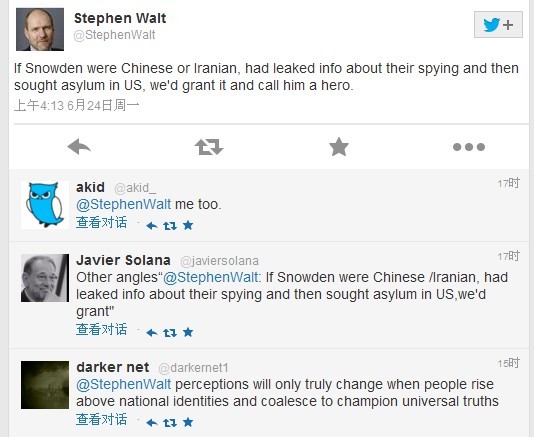
If Snowden were Chinese or Iranian, had leaked info about their spying and then sought asylum in US, we'd grant it and call him a hero.
 
Windwing - US Hero


China More Democratic Than Russia These Days

China More Democratic Than Russia These Days


Russian policymakers frequently blame the country's 1990s democratization for all its current woes. They point to the "healthy" authoritarianism in China as the reason for its economic miracle.

Yet, as Bulgarian political scientist Ivan Krastev argues on Opendemocracy.net, "in many of its practices, China is more democratic than Russia, and its decision-making is undoubtedly superior."

Russia has popular elections but no change of power. The role of elections, Krastev points out, is to avoid a peaceful rotation of rulers and legitimize a lack of change. China, without democratic elections, has ensured a regular rotation of power for three decades. The president and the prime minister are automatically replaced every 10 years by new leaders. The old team retires from public life.

The Chinese system prevents the emergence of personalized authoritarianism and establishes clear succession rules. Russia's system is a personalized regime that seeks to block real succession of power.

China tolerates major labor unrest, with thousands of strikes unfolding every year that help the government identify and deal with serious problems on the regional level and thrust future leaders in crises that test their mettle. Russian leaders clamp down on discontent and hide their incompetency through sham elections.

While the Kremlin broadly tolerates the opposition, Krastev argues, it does not listen to it. Dissent on policy matters within the government is suppressed. The Chinese leadership sees having different views as legitimate. "The loyalty test in China starts only once the Communist Party has taken a decision. The loyalty test in Russia starts as soon as the president makes a proposal," he says.

Russia is governed by a circle of friends. The most important factor influencing membership is to have known Putin before he became president. Few of these policymakers had proper careers of their own. China, meanwhile, is ruled by a meritocracy. The party recruits the best and the brightest and invests a lot into ensuring the diversity of experience and regional representation.

China and Russia differ fundamentally in their approach to political experimentation. China's leaders love to experiment with political and economic reforms to see what works best. Russian leaders shun experimentation for the sake of stability.

What matters here is the trajectory. While Russia is faking democracy to cover up an emerging dictatorship, China's authoritarianism is evolving into a more pluralistic system.


2013-06-24

China's Rail Link To Hit Indian Exports

China's Rail Link To Hit Indian Exports
Windwing - China's Rail Link To Hit Indian Exports

BEIJING: The $707 million Yuxi-Mengzi rail line, linking Kunming in southwest China to Singapore in southeast Asia, will become operational by the end of this year, posing a threat to Indian exporters competing for market space with China. The rail line, originating in China's Yunnan province, will traverse through Vietnam, Laos, Thailand and Singapore, completing a course of over 2,000km.

The announcement comes just before Chinese commerce minister Chen Deming meets his Indian counterpart Anand Sharma at the joint economic group on August 27 in New Delhi.

China also plans to build rail routes linking Kunming to Myanmar and, eventually, Bangladesh. On completion, it will create a grand alliance of Asian markets supporting each other, while expanding China's markets. The line will provide an impetus to trade which has slumped due to cancellation of purchase contracts by recession hit West.

******************************************************************************************

India:China Is So Bad. They Even Dare To Build Railways To Other Countries Without India's Approval. India Should Protest!