Showing posts with label History. Show all posts

2014-05-20

What Japan Cannot Learn From Germany

What Japan Cannot Learn From Germany

Windwing - What Japan Cannot Learn from Germany
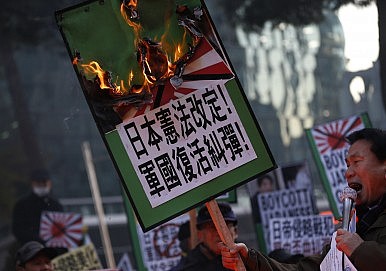
Image Credit: REUTERS/Kim Hong-Ji

Reports on contemporary Japanese diplomacy usually mention and often focus on the large role that the history of World War II plays in Japan's relations with its Asian neighbors. Japan's murderous past keeps making headlines, often through comments from politicians, public officials, lobbying groups, or historians. U.S. President Barack Obama's statement, during his recent Korea visit, that Japan's use of South Korean comfort women during the war was an egregious violation of human rights is but one of many examples.
In trying to understand why Japan's past casts such a long shadow onto its present, one promising approach is to compare the country to its erstwhile World War II ally, Germany. That country's targeted campaign of genocide still plays an important role in shaping the country's national identity, but Germany's past still does not weigh as heavily on its relations with its neighbors as Japan's does. Through a difficult and arduous process of confronting, remembering, and on occasion apologizing for its Nazi past, Germany has come to terms with its history and reconciled with the victims of its past aggression. Faced with this evidence, it is tempting to conclude that the more strained, sometimes poisoned relations that Japan has with its Asian neighbors are a direct product of the way in which it dealt – or failed to deal – with its wartime history.
The most recent instance of this line of argument can be found in Jochen Bittner's New York Times op-ed, "What Germany Can Teach Japan" published last month. Bittner argues that postwar Germany has become "normal" – defined as "earning and enjoying the trust of its neighbors" – because it dealt properly with its history of genocidal mass murder. If Japan also wants to become normal, he recommends, it should simply follow the German example.
But it is not that simple. The fact that Germany has achieved "normalcy" cannot be reduced to the way it dealt and deals with its history. Factors beyond Germany's control, including fortunate circumstances and cooperative neighbors, played a far more important role and make Germany's recipe for normalcy impossible for Japan. A brief glance at Japan's postwar history reveals at least five factors which explain why, almost 70 years after the war, Germany is surrounded by friendly allies and Japan is not.
First, as unity among the Allies who had vanquished Nazi Germany and Imperial Japan during World War Two after 1945 gave way to the competition between capitalist democracies and communist autocracies, West Germany was integrated into NATO, while Japan found cover under America's nuclear umbrella. German dependence on a multilateral treaty system, supported by three nuclear powers (United States, Great Britain and France) gave that country some room to negotiate, and on occasions exploit, differences between its three protectors. Differences between the U.S. and France were to become particularly important for Germany's future. Japan, on the other hand, has been locked since 1945 into a bilateral relationship with the U.S. where the latter enjoys (and shows little inclination to relinquish) monopoly power in matters of protection, leaving Japan relatively little negotiating room.
Second, while the ideological conflict between the U.S. and the Soviet Union is commonly known as the Cold War, the term is appropriate only in the West. In Asia the conflict between the capitalist and communist camp was fought at a much higher temperature in a series of proxy wars: first in Korea, then in Vietnam (and secretly in Laos and Cambodia) and finally in Afghanistan. This did not create a climate that encouraged Japanese foreign policymakers to seek freedom from U.S. protection. The already close security relationship only grew closer.
Third, Germany borders France, a country that aspired after the war to return to the status of a "Grande Nation," independent of superpower influence. To do that, France needed a relationship to balance her dependence on U.S. protection. What better choice than Germany, the world's second largest economy before the war, soon to become Europe's economic powerhouse. Certainly, the West German government deserves credit for seizing the opportunity that France offered and for developing the Franco-German relationship over the years into what today is the European Union. But this would have been impossible without France's goodwill, initiative and cooperation. Faulting Japan for not having done something similar is short-sighted, for which country in the Far East is Asia's counterpart to France? Most Asian countries were still colonies in the early postwar period, thus unable to formulate an independent foreign policy and form alliances with Japan. In fact, the only nation of France's stature in Asia in the postwar period was the People's Republic of China. Does anyone seriously believe that Washington would have stood by idly watching if Japan had sought to establish a relationship with communist China similar to that between Germany and France in Europe?
Fourth, German Chancellor Willy Brandt's "Ostpolitik" – that is, his offer of reconciliation across the Iron Curtain, memorably symbolized by kneeling in front of the Ghetto Uprising Memorial in Warsaw in 1970 – became possible only after Germany had cemented its Atlantic relation with the U.S. and begun laying the foundation for the EU. Only because Germany enjoyed the military protection provided by NATO, access to European markets, and peace in Europe did German leaders feel able to try not only more democracy, but also a rapprochement with communist neighbors in Eastern Europe. Within the U.S.-sponsored security architecture put in place in Asia, Japan never enjoyed the degree freedom that Germany exercised under Brandt. Offending U.S. interests was and remains too risky for a country that depends on U.S. protection in military affairs and access to U.S. markets.
Finally, while the end of the Cold War was experienced as a turning point for many European countries, especially in Germany, there was no corresponding watershed moment in Asia. As the Soviet Union dissolved, its republics and satellites regained true sovereignty, and Germany was reunited. In spite of the tremendous economic growth experienced in Asia, the predominant perception there is one of political stasis. Korea remains divided. So does China. Authoritarian regimes are still in place. The year 1989 saw the fall of the Berlin wall at the center of Europe, and the Tiananmen Square massacre in Asia. So is it any wonder that Japan sought and seeks to align itself more closely to its protector, the U.S., while occasionally trying to negotiate some freedom within the existing structure? As John Mearsheimer has convincingly argued, Tokyo's recent hard line against Beijing can also be understood as an attempt to assure the U.S. of Japan's loyalty in the unfolding competition between China and America. If one recalls the Ancient Roman precept "divide et impera," one wonders if thorough reconciliation among Asian nations really is in America's interest, as continued American dominance over the region is premised on division.
Given all these differences in Germany and Japan's respective geopolitical environments, it is not really fair to explain Japan's failure to become "normal" like Germany by pointing to the different ways in which these two countries have dealt with their past. Perhaps the question of whether Japan is normal should be decided by comparing it not with Germany, but with other nations around the world, most of which find it hard to apologize to the peoples they have victimized in the past. It took France 50 years after Algerian independence before President François Hollande admitted in 2012 that French rule over Algeria had been "profoundly unjust and brutal" – yet he still made a point of not apologizing. Has England apologized for massacres committed during its rule over India? Not yet. Have we heard Italy apologizing for its genocidal campaign in Ethiopia during the 1930s? Or Turkey for the genocide of the Armenians? Don't hold your breath. And all the people of Vietnam have gotten out of the U.S. so far is Robert McNamara's statement that the Vietnam war was "wrong, terribly wrong."
The true tragedy is not that Japan has failed to face its past, but that this failure is so common among the nations of this world that it is normal.
Stefano von Loë is an international business consultant in Hamburg, Germany and has a PhD in History and East Asian Languages from Harvard University.

2009-06-06

Tibet!Free?

Should Tibet Be Free?
July 29, 2008 Brian Dunning
 
Perhaps an equally important question is "Should a science podcast take on a political topic?" For a long time, listeners have been sending me requests to do an episode about Tibet, and for a long time I've been putting the requests into a folder and keeping it stored away. This is Skeptoid, not Politicaloid, and my purpose is not to advocate one side or the other in political questions where you have two sides that are perfectly valid to different groups of people. But the more requests I've received, the more I've realized that there is a lot of misinformation, if not true pseudoscience, surrounding Tibet. There is, undoubtedly, a set of popular pop-culture beliefs out there, based entirely upon made-up crap that bears little resemblance to reality.
Mind you, I'm not saying "Hey, you've heard one side, let me give you the other side," because that's the job of a political commentator. What I'm saying today is "Here is the reality of Tibet, go forth and form whatever opinion you like," but base it on reality, not on made-up metaphysical nonsense. I'm encouraging you to apply skepticism to the reasons you may have heard for freeing Tibet.
Like most Americans, I grew up watching video of the Chinese army taking howitzers and destroying the massive centuries-old Tibetan monasteries in 1959, and that's an indisputable crime against history, religious freedom, and the dignity of Tibetans. And then I watched video of the Dalai Lama, the exiled spiritual and political leader of the Tibetan people, in his red and yellow robes, speaking words of wisdom and brotherhood and freedom and peace. And I'll freely admit: For nearly all of my life, this was the extent of my knowledge of the Tibet situation: Violence and cruelty from the Chinese; innocence and beauty from the Tibetans. I believe that many Westerners, including many who fervently wave Free Tibet placards, have little knowledge of the situation any deeper than that. But isn't it likely that there's more to it than that? Isn't it equally disrespectful of the Tibetans as it is of the Chinese to attempt to encompass who and what they are with those tiny little pictures?
A complete history lesson is impossible, but here's a quick overview of the points relevant to today's discussion. China and Tibet have a long and complicated history. In 1950, China invaded to assert its claim, and ruled by trying to win hearts and minds, building roads and public utilities, and allowing the Tibetan system of feudal serfdoms to remain largely intact. In 1959 the Tibetan ruling class revolted, prompting a Chinese crackdown that sent the Dalai Lama and most other Tibetan aristocrats into exile in India, where they remain to this day. The former serfs became ordinary Chinese citizens, and Tibet is now an "autonomous region" in China, a status that many describe as actually less autonomous than an ordinary Chinese province. From his palace in India, the Dalai Lama now travels the world in a private jet, hobnobbing with the wealthy and powerful, fundraising, and writing highly successful books on metaphysics.
Recently there were some anti-China, pro-Tibet protests in Nepal, a neighboring independent nation. This is illegal in Nepal, and the authorities have been cracking down on it. Why does Nepal side with China on this issue? Because they depend heavily on Chinese aid to survive, and this is a requirement that China imposes, though they call it a "request". At first glance you might be shocked that an independent nation would give up its freedom of speech to make a deal with the devil, but that's an easy opinion to form when you're not hungry. It makes sense for Nepal to agree to these terms, because their back is against the wall: They need China's aid. As for China imposing this condition? Well, that's one for you to chalk up in your column of "Things China Needs to Reconsider".
So, why doesn't China simply give Tibet the same treatment they give Nepal — let them be an independent nation, give them aid, and just require them to say only nice things about them? Well, Nepal has long been an independent nation; Tibet hasn't. The history of China's rule over Tibet is exceptionally complicated and goes back many centuries. Anyone who tells you that either Tibet is historically part of China, or that Tibet is historically free, is making a disingenuous oversimplification. Personally, I choose to discount this subject completely, and not because it's too intricate to make a clear decision. I discount it because practically every square inch of land on the planet has been taken over militarily or annexed or stolen in one way or another from one people by another people. We don't give California back to the Spanish, and we don't give Italy back to Norway. Ancient history is not the way to settle current border disputes. To find a meaningful settlement that makes sense for people today, you have to consider Tibet to be a current border dispute. So while we're chalking up China's claim of ancient possession in the column of "Things China Needs to Reconsider", let's also chalk up Tibet's claim of ancient autonomy in the column of "Things Tibet Needs to Shut Up About".
And once we open up that column, we find it's a Pandora's Box. Advocates of a free Tibet make a long list of charges against Chinese oppression, largely centered upon a loss of rights and freedom. This claim makes anyone familiar with Tibetan history cough up their coffee. The only people who lost any rights under Chinese rule are Tibet's former ruling class, themselves guilty of cruelty and oppression of a magnitude that not even China can conceive. The vast majority of Tibetans, some 90% of whom were serfs, have enjoyed a relative level of freedom unheard of in their culture. Until 1950 when the Chinese put a stop to it, 90% of Tibetans had no rights at all. They were freely traded and sold. They were subject to the worst type of punishments from their lords, including gouging out of eyes; cutting off hands, feet, tongues, noses, or lips; and a dozen horrible forms of execution. There was no such concept as legal recourse; the landowning monk class was the law. There was no such thing as education, medical care, sanitation, or public utilities. Young boys were frequently and freely taken from families to endure lifelong servitude, including rape, in the monasteries. Amid all the pop-culture cries about Chinese oppression, why is there never any mention of the institutionalized daily oppression levied by the Dalai Lama's class prior to 1959?
Free Tibet advocates also point to the destruction of Tibetan culture. This charge is particularly bizarre. The only art produced in Tibet prior to 1950 was limited to the output of a few monks in each monastery, principally drawings of monasteries. New literature had not been produced in Tibet for centuries. Since the 1959 uprising, art and literature in Tibet have both flourished, now that the entire population is at liberty to produce. Tibet even has its share of well known poets, authors, and internationally known artists now.
Make no mistake about China's history of human rights failings: China's "Great Leap Forward" and "Cultural Revolution" programs from 1958 through 1976 were as disastrous for Tibet as they were for the rest of China. There can never be any excuse for the deliberate widescale destruction of life, liberty, and property during those years. Hundreds of thousands of Tibetans, and tens of millions of Chinese, lost their lives during this misguided pretense at "reform". This was a phase that China went through, and it's arguable that Tibet would have been spared this torment if they had been independent at the time. But for your average Tibetan in the field, a serf with no rights, living and working and dying at the whim of his lord, were those decades really worse than they would have been without China? There's no way to know, but to a skeptical mind, it's not a slam-dunk that China's Cultural Revolution was harder on Tibet than Tibet's ruling class had always been in the past.
) If we think back to our list of red flags to identify misinformation, cultural campaigns and celebrity endorsements should always trigger your skeptical radar. Few campaigns are as near and dear to the hearts of Hollywood activists as "Freeing Tibet". Notable Tibet advocates include Sharon Stone, Richard Gere, Paris Hilton, and the great political science scholar Lindsay Lohan. Jounalist Christopher Hitchens notes that "when on his trips to Hollywood fundraisers, [the Dalai Lama] anoints major donors like Steven Segal and Richard Gere as holy." Being anointed as holy probably does great things for your social standing within Hollywood, but it should not be considered evidence of expertise. I'll bet that if you asked either Steven Segal or Paris Hilton to lecture on the events of the Lhasa Uprising of 1959, you'd find that neither knows even the most basic information about the cause they so passionately advocate. Just because Hollywood celebrities promote a viewpoint doesn't mean they're qualified to do so, something that (unbelieveably) still seems to escape most people.
Furthermore, the people shouting loudest about freeing Tibet don't seem to be aware that that's not even what the Dalai Lama wants from China. He's not seeking full independence, Nepal style; rather he would like to achieve the same status as Hong Kong, which is a "special administrative region". This would give them full economic benefits without having to become a regular province, something along the lines of a US territory. So here's a note to all the Hollywood celebrities: If you really want to support the Dalai Lama, ditch your "Free Tibet" signs and paint some up that say "Change Tibet from an Autonomous Region to a Special Administrative Region". It's not as good of a sound bite, and it's a change that would have little practical impact on Tibetans; but it would allow the Dalai Lama to return to his aristrocratic lifestyle and his 1000 room palace at Potala.6
So to all those who so heatedly call for the freeing of Tibet, first consider whether you have the expertise to know whether Tibet is best served as an autonomous region or as a special administrative region. Understand exactly what implications such a change may have upon the economics and the daily lives of its citizens, or maybe even entertain the possibility that it's a decision best left to Tibetans.
============================================================
What Is The PLA To Invaded Tibet In 1959?So,That's PLA Invaded All Provinces Of ROC In 1949.
In 1911 Occurred The Revolution, Has Overthrown The Qing Dynasty Government, And Established The Republic Of China.Tibet Is A Part Of The Territory Of The ROC.In 1912 The ROC Central Government Set Up The Mongolian And Tibetan Affairs Office, Was In Charge Of Tibet Business, And Has Appointed The Senior Chief Stationed In Tibet.The Tibetan Local Government Representatives, Also Participated In The NanJing National Government The National Assembly Which Convened In 1946.

The Decree Of The ROC National Government Confirming Lhamo Dongrub As The 14th Dalai Lama.
Lhamo Dongrub Is The 14th Dalai Lama. His Title And Identity Was Approved By The China Central Government.
In 1940 ROC National Government's Order Recognized That Lhamo Toinzhub Is 14th Dalai Lama.

In 1938 Winter, The Tibetan Local Government Looked For Three Successors To The 14th Dalai Lama "Reincarnation", And Submit To The National Government,On February 5, 1940, The National Government Issued The Order, Special Authorization From QingHai's Lhamo Toinzhub Successor For Tibet 14th Dalai Lama,Mongolian And Tibetan Committee Chairman WuZhongXin Represented The ROC Central Government To Preside Over The 14th Dalai Lama's Enthronement Ceremony In Lhasa Patala.

In 1954 To BeiJing To Attend The National People's Congress.
Dalai,Panchen And Mao In BeiJing

The 14th Dalai Lama As Long As Give Up The Independent Standpoint Being Possible To Return To Tibet.

However, The Issue Of Tibet Has Been Foisted Upon Some Sectors Of The Movement In The U.S. In Order To Weaken China. The Relationship Between The U.S., With Its Aim To Undermine The Gains Of The Chinese Revolution, And The Dalai Lama And His Clique Is An Old One And Goes All The Way Back To The CIA Manufactured "Uprising" Of 1959.

It Is The Destruction Of The Old Mode Of Production And Property Relations That Angers The Separatist Movement That Surrounds The Dalai Lama. The U.S. Cares Nothing About Buddhism, Tibetan Monks Or Tibetan Culture, So It Never Mentions How The Culture Has Been Preserved, Or That Tibet Has Been A Part Of China For Centuries.

The Dalai Lama And Those That Surround Him Use The Fact That People Are Increasingly Interested In Tibetan Culture To Influence Attitudes By Crying "Cultural Genocide." But What Culture Would There Be To Spark Anyone's Interest If It Were Being Wiped Out And The Process Of "Cultural Genocide" Was Nearing Its Fifth Decade?


Most Chinese Believe That Westerners Is Not Stupid Or Ignorant, But With The Purpose Propaganda, Is Similar To Dismemberment The Soviet Union And Yugoslavia.

Related Reading:
Professor M.C.Goldstein -- Case Western Reserve University
A History Of Modern Tibet,1913—1951——The Demise Of Lamaist State.University Of California Press , 1989
The Snow Lion And The Dragon, Universty Of California Press , 1997
China,Tibet And The United States: Reflections On The Tibet Question , 1995

Tom.Grunfeld - New York State University's History Professor
The Making Of Modern Tibet.M.E.Sharp,Inc 1987,Reved.
Tibet And The United States , 2000
Barry Sautman - Columbia University Doctor
The Tibet Question And The HongKong Experience , 1995
Association,Federation And "Genuine" Autonomy:The Dalai Lama's Proposals And Tibet Independence
DongDong Tian - Brandeis University Doctor
The Tibet Issue In Sino-American Relations:United States Policy Since Rapprochement
Former CIA Member John Kenneth Knaus
Orphans Of the Cold War , 1999
An Uncertain Ally:The US Government And Tibet,Harvard Asia Quarterly,2000 Summer
Tibetan Scholar Tsering Shakya - University Of London Professor
The Dragon In The Land Of Snows——A History Of Modern Tibet Since 1947 , 1999

2009-05-05

Nanking And Rabe

72 Years Ago, The Japanese Forces Conquer By Killing Nanking, 300 Thousands Chinese Ghosts Were Wailing.

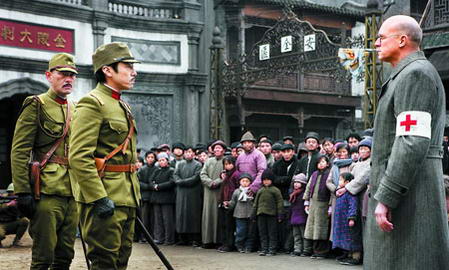
For 72 Years, The Subject Of Nanking Massacre Film Not Below 10.At The End Of April, " Nanking! Nanking! " And " John Rabe" In The Same Slot On The Same Historical Events Film Met.

Both Films Have Chosen The Theme Of "Humanity", Difference Is That The "Nanking" Is Reflected A Japanese Soldier's Humanity, "Rabe" Is Reflected A Faithful Nazi's Humanity.


"Rabe" Is A Hollywood Style Movie, Is A Foreigner In The Resonsideration Of The Slaughter Occurs In China.Rabe Successfully From A Nazi Party Member “Evolution” Become A “Good Men Of NanJing”.In The People Eye Nazi Is Hornets How To Become A The Good Person."Nanking" More Like A Literary Film, Discusses In The Invader Troop Also Latent Humanity.How Ordinary Individuals Into A Murderous Demon.


The Success Of "Nanking" Is Narrate A Universal Truth About Humanity,But The Failure Is Standing In The Invaders Brutism Shocking Stage Shows The Japanese Army's Humanity Was Not Exist At That Time .


"Rabe" Is Similar To " Schindler's List", As More Emphasis On " Salvation" As The Theme.The Theme Of Values Are Positive And Complete,Film Standing Position Of The Third Party,Standing In The International Humanitarian Perspective About Narrated In The Past Saw Picture.The Objective Of Mold A Rabe At First Believed Nazi, Not Care The Chinese People, After Comparing The Next Achievement Will Move As People.

Historical Pictures
Hundred Cut Event


The Japanese Soldier's Suicide, It Is The "Nanking" A Major Failing,Presented The Deviation To Movie's Value Orientation.Just Erupted Insufficient A Half Year At Japan Comprehensive Aggressive War Against China To Have The Japanese Soldiers Because To Kill The Chinese In NanJing To Rebuke Oneself To Shot Himself, This Is The Japanese As An Insult To The Spirit Of Bushido,History Available, But All In The PostWar.Humanity Is Truly,Absolute Good And Absolute Badly Does Not Have."Nazi" In Germany And The European May Be A Very Bad Word,But It Still Done Some Good Deeds To The Chinese(Such As At The Beginning Of Sino-Japanese War Germany's Aid To China).


1937 NanJing, To The Chinese People Is A Disgrace. The Capital Was Occupied, The Civilians Were Massacred.Defends NanJing's Soldier, Many Are The Army Which Retreats Down From ShangHai,Simply For Catch Breath Without Enough Time ,The Exhausted Panic-Stricken Remnant Armed Forces, Are Simply Impossible To Defend NanJing.The Defensive Policy Deals With The Insufficiency Chaotic, But Also Places Hopes In German Ambassador Trautmann The Mediation.ShangHai Before Engages In A Decisive Battle The Chinese Army's Resistance To Be Too Intense,Japanese Wants To Retaliate,And The Collapse Of The Chinese People To Fight The Resistance.NanJing Is A Turning Point,The True Resistance Started.All People Realized That,This War Is Not Only The Pure Victory And Defeat, But Is War Of The Life And Death.In Frontal Battlefield, Chinese Army's Main Force,And More From SiChuan, YunNan, NorthWest To Carry The Broadsword To Lack The Weapon Preparation The Army To Tow Japanese Forces' Footsteps Stubbornly In The Long Front.The Final Civilization Has Defeated Barbarically.


It Is Said " John Rabe " Final Subtitles,On The German Version Had A Few Words Original Intention Is "The NanJing Massacre Still Does Not Acknowledge For The Japanese Government Until Now",When Chinese Version Altered To "The NanJing Massacre Still Not To Acknowledge For Japan Right-Wingers Power Until Now",Reasons For The Change Is Said To Be Due To The Politically Correct,For "Sino-Japanese Relations" Need.Chinese Mercy Has Not Moved Japan,A Congressman Hereditary Still Boast About "Democratic System", An Over-Trapping Whale Still Shouted The Environmental Protection, Have Many Own Question Repeatedly Has Not Forgotten To Stress North Korea's Historical Vulnerable Point. Does Not Reflect On Their Own Also Become The Victims Of World War II, Is Unable With The Neighboring Country To Live Together In Peace And Harmony.

Related :Nanking1937

2008-03-28

Aethereally Tibet

About Tibet's Some Pasts
China Is A Unified Multinational Country, Tibet Is A Chinese Inalienable Part Since The Ancient Times. Since Ancient Times On Tibet Plateau On The Scattered Numerous Tribe, Has Passed Through The Long Years To Unify Gradually, Becomes Present's Tibetan National Minority. Tibetan National Minority's National Hero SongZanGanBu Annexed Ten Tribe And The Clan And Tribe In The 7th Century, Unified The QingHai-Tibet Plain Majority, Established TuBo Dynasty, Establishes The Capital City LuoSuo (Now Lhasa). SongZanGanBu Reigning Period, Firm Will Fixes With Tang Dynasty, Absorbs Tang Dynasty's Advanced Production Technology And The Political Culture Achievement. He Once Two Times Dispatched Minister To Go To Tang To Propose, Has Gotten Married Princess WenCheng,Emperor Tang TaiZong's Niece In AD. 641 Years And Has Constructed Famous Potala Palace. SongZanGanBu Also From Tang Dynasty Production Technologies And So On Introduction Brewing, Mill, Paper Ink, Dispatches The Children Of The Nobility To Study The Poetry Book To ChangAn(Now Xi'An), Hires The Han Nationality Writers To Enter The Flourishing Generation Of Standard Table To Be Sparse, With The Tang Dynasty In Aspects And So On Politics, Economy, Culture Maintained The Extremely Friendly Relations. A.D. 710 Years, Tang Dynasty Other Princess JinCheng Also Carries The Massive Handicraft Technology To Marry TuBo. AD. 821 Years, The Tang Dynasty And TuBo Form An Alliance In Lhasa Eastern Suburb, The History Said That “ChangQing Alliance”. Will Make Treaties Of Alliance Both Sides To Reiterate In The History “Become With One” The Sister's Son Maternal Uncle Ties Of Friendship Among Relatives, The Discussion Present “The State Like One”. Records This Time Makes Treaties Of Alliance The Content Carved Stone “Tang And TuBo To Make Treaties Of Alliance The Tablet” To Altogether Have Three, One Of Stone Stands Together Before Lhasa Jokhang Temple.
AD. 842 Years, TuBo Dynasty Splits Because Of The Internal Strife And The Tangled Warfare Disintegrates, Before Establishes A Separatist Regime A Side TuBo Powerful Minister, Has Become The Emerging Place Feudal Influence, They Develop Positively Propagandize Buddhism's Activity To Maintain The Rule,The Tibetan Buddhism Enters Each Religious Sect To Form The Time,One After Another Appearance NingMa、GaDang、SaJia、GaJu、GeLu、XiJie、JueYu、JueNang、GuoZha、XiaLu And So On Many Religious Sects.The Big Influence Has 5 Religious Sects:NingMa Sect(RedChurch),GaDang Sect,SaJia Sect(PatternChurch),GaJu Sect(WhiteChurch),GeLu Sect(YellowChurch) .In 1247, SaJia Sect Hierarch BanZhiDa·GongGaJianZan Approves of All Tibetan Member Submission Mongolian . In 1260, GongGaJianZan's Nephew,SaJia Sect Dharmaraja---BaSiBa (Phagspa) , He Is Sealed By Yuan Dynasty Emperor Kublai Khan As The Country And Emperor Teacher (Followed Orders To Create “BaSiBa Mongolian Character”) ,To Responsible For Process And Have Jurisdiction Over Tibet Religion And Local Affairs .Mongolia Causes Tibet Various Influences To Reunify,And Has Established Managerment Mode Of The Central Government And The Religious Leader Together Cooperate To Management Tibet's Local Affairs And Religious .The 14th Century Middle Period, SaJia Sect To Decline Gradually, GaJu Sect And GeLu Sect Closely Follow After Rise , In 1653 GeLu Sect NagDbanBloBzan To BeiJing Has An Audience With Qing Dynasty ShunZhi Emperor And Then Knighted Is Fifth DaLaiLaMa , Rules Tibet's Most Districts In Lhasa.In 1713, Emperor KangXi Knight RuoSangYiXi Is "PanchenErdini",5th Panchen Start Rules Tibet's Another Areas In RiKeZe . In 1721, The Qing Dynasty Central Government Established GaLun System In Tibet (Central Government Appoint Local Nobility To Be Responsible For Management Affairs),In 1727, The Qing Dynasty Set Up High Commissioner Stationed In Tibet, Represented Central Supervises Tibet Local Administration,Tibet And SiChuan, YunNan, QingHai's Sector Boundary, Is Dispatches An Official In This Time To Survey Officially.In 1750, Adjusted Manages Tibet's Administrative System Once More , Abolishes The Infanta-King System(Local Nobility Management System) ,Establishes Tibet Local Government(Namely "GaXag"), Had Stipulated System Of High Commissioner With DaLai And PanChen Together Cooperate Grasp Tibet Affairs.In Order To Preclude The Dispute Of Living Buddha To Be Reincarnated , In 1793 Qing Dynasty Foundation Losziehung F. Aus Einer Goldurne System,So The Qing Dynasty Specially Makes Two Golden Vases For Drawing Lots ,One Uses In DaLai And PanChen Reincarnated Soul Boy's Recognizing, Presently Deposits In Lhasa Potala Palace;Another Uses In Confirming That The Mongolian And Tibet Leading Living Buddha, Qutugtu's Reincarnated Soul Boy, Presently Deposits In The BeiJing YongHe Palace.Henceforth DaLai And PanChen Must Award GoldWare And GoldenSeal (With Chinese, ManChu And Tibetan) By The Central Government Only Then Have The Political Significance And The Legal Effect.In 1938 Winter, Looked For LhamoToinzhub In Qinghai,Proclaimed The Command By Way Of National Government President To Authorize To Manage In February 22, 1940 By National Government Mongolia And Tibet Committee Chairman WuZhongXin, Held An Office In Potala Palace, That He Was 14th DaLai Goes Into Exile India In 1959 . So Let's Wait And See Who Is The Next DaLaiLaMa?
The Western Media Always Wanted To Made Before 1950 Tibet Out Of The Heaven.But In Fact At That Time Tibet Also Still In The Age Of Feudal Serfdom,Many People (98%) Are The Serfs ,The Life Situation Is Quite Poverty-Stricken, Only Better Than Black American Before 1865 (Their Aren't Worry Racial Discrimination ) . That Isn't The Paradise Which Everybody Yearned. After Peaceful Liberation Of Tibet,The Turning Over Was The Social Master's General Tibetan National Minority People Only Then Truly To Have The Political Right To Independence , Social Economy Right To Development , Inherits The Development Culture And The Freedom Right For Religions Belief .
In 1959 , These Slave-Owner's Rights And Interests Have Been Eliminated,So They Been Planning And Propagandize How Have Rehabilitate To The Beforehand Status , Then Even Does Not Give A Thought To Other People's Rights And Does Not Hesitate To Divide The Motherland.

Tibet Was, Is And Will Always Be A Part Of China!!!